Meal Planning in a Tiny RV Kitchen Without Losing Your Mind
Cooking in a recreational vehicle (RV) can be one of the most rewarding parts of life on the road. Preparing your own meals saves money, allows you to eat healthier, and creates a sense of home no matter where you’re parked. However, anyone who has stepped into an RV kitchen knows that limited counter space, compact appliances, and minimal storage require a different approach than cooking in a traditional home.
The good news is that with thoughtful meal planning and a few practical strategies, you can prepare delicious meals without feeling overwhelmed. Whether you’re a weekend camper or a full-time RVer, these tips can help you make the most of your tiny kitchen while keeping mealtime enjoyable.
Start with a Weekly Meal Plan
One of the biggest mistakes RV travelers make is buying groceries without a plan. Limited refrigerator and pantry space means every item should have a purpose.
Before heading to the grocery store, outline your meals for the coming week. Include breakfast, lunch, dinner, snacks, and beverages. A simple plan reduces food waste, prevents unnecessary purchases, and makes cooking less stressful after a day of exploring.
Aim to choose meals that share ingredients. For example, grilled chicken can become tacos one night, a salad topping the next day, and part of a pasta dish later in the week.
Keep Ingredients Versatile
Since storage is limited, focus on ingredients that can be used in multiple recipes.
Some versatile staples include:
- Rice
- Pasta
- Tortillas
- Potatoes
- Eggs
- Chicken
- Ground turkey or beef
- Canned beans
- Fresh vegetables
- Cheese
- Leafy greens
With these basics, you can create dozens of different meals without filling every cabinet.
Organize Your Pantry Efficiently
Small spaces become cluttered quickly if everything is stored in its original packaging.
Transfer dry goods such as rice, pasta, cereal, flour, and snacks into stackable containers. Clear containers make it easier to see what you have while maximizing cabinet space.
Use baskets or bins to group similar items together, such as baking supplies, canned goods, or breakfast foods. This organization helps you find ingredients quickly and prevents duplicate purchases.
Make the Most of Your Refrigerator
RV refrigerators are much smaller than residential models, so organization is essential.
Store frequently used items where they are easy to reach and rotate older foods to the front to reduce waste. Keep raw meat on lower shelves to minimize the risk of cross-contamination, and use reusable containers instead of bulky packaging whenever possible.
Planning meals around perishable ingredients first can also help reduce spoilage.
Prep Ingredients in Advance
Meal preparation saves valuable time and counter space during the week.
Before storing groceries, consider:
- Washing vegetables
- Chopping onions and peppers
- Portioning meat
- Grating cheese
- Preparing salad mixes
- Cooking grains in advance
Having ingredients ready to use makes cooking much faster, especially after long travel days.
Choose One-Pot Meals
One-pot recipes are perfect for RV kitchens because they minimize dishes and simplify cleanup.
Popular options include:
- Chili
- Beef stew
- Chicken and rice
- Pasta dishes
- Stir-fries
- Soups
- Curry
- Jambalaya
These meals are filling, flavorful, and require fewer cooking utensils.
Use Outdoor Cooking When Possible
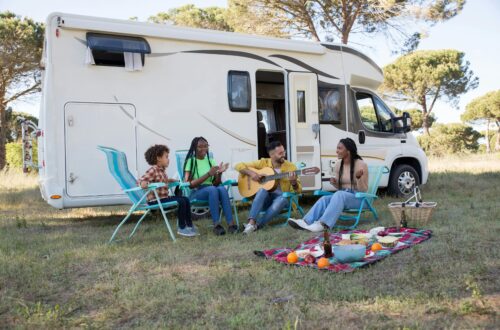
Many RVers enjoy cooking outside whenever weather permits.
Portable grills, propane griddles, and camp stoves expand your cooking space while keeping heat and food odors outside the RV.
Outdoor cooking is especially useful during hot summer months when running the oven could make the interior uncomfortable.
Grilled vegetables, burgers, seafood, and kebabs are all excellent choices for campsite meals.
Invest in Multi-Purpose Kitchen Tools
Every kitchen tool should earn its place in an RV.
Look for items that serve multiple functions, such as:
- Cutting boards that fit over the sink
- Nesting mixing bowls
- Stackable cookware
- Combination measuring cups
- Collapsible strainers
- Multi-purpose knives
Avoid bringing rarely used gadgets that consume valuable storage space.
Batch Cook Whenever Possible
Preparing larger portions can reduce the number of times you cook during the week.
For example, a large batch of soup, shredded chicken, taco meat, or pasta sauce can become several different meals over multiple days.
Freeze leftovers if space allows or refrigerate portions for easy lunches.
Batch cooking also reduces grocery shopping frequency while traveling.
Keep Emergency Pantry Meals
Travel plans sometimes change unexpectedly.
Heavy rain, late arrivals, or remote campsites may limit access to grocery stores.
Maintain a small supply of shelf-stable foods such as:
- Pasta
- Canned soup
- Tuna
- Peanut butter
- Crackers
- Instant rice
- Oatmeal
- Shelf-stable milk
These items provide convenient backup meals when needed.
Minimize Food Waste
Food waste becomes more noticeable when storage space is limited.
Use ingredients creatively before they spoil.
For example:
- Overripe bananas become smoothies or pancakes.
- Leftover vegetables can be added to omelets.
- Extra chicken works well in wraps or salads.
- Stale bread becomes croutons or breadcrumbs.
Planning meals around leftovers helps stretch your grocery budget.
Stay Organized While Cooking
Because RV kitchens have limited workspace, staying organized during meal preparation makes cooking much easier.
Clean as you go by washing utensils and wiping counters throughout the cooking process rather than waiting until the end.
Returning ingredients to cabinets immediately after use also helps keep work surfaces clear.
Shop More Frequently
Unlike a traditional home where large grocery trips are practical, RV living often benefits from smaller shopping trips.
Buying only what you’ll use within several days reduces spoilage while allowing you to enjoy fresh produce throughout your travels.
Frequent shopping also gives you the opportunity to explore local farmers’ markets and regional grocery stores.
Adapt to Local Ingredients
One of the joys of RV travel is experiencing different regions.
Instead of recreating the exact same meals every week, embrace local specialties and seasonal produce.
Fresh seafood along the coast, locally grown fruits, regional cheeses, or farm-fresh vegetables can inspire memorable meals while supporting local businesses.
Keep Cleaning Simple
Limited sink space means dishes can accumulate quickly.
Using fewer pots, plates, and utensils reduces cleanup time.
Biodegradable dish soap, microfiber towels, and compact drying racks help keep the kitchen tidy without occupying unnecessary space.
Cleaning immediately after meals prevents clutter from taking over your tiny kitchen.
Maintain Flexibility
Even the best meal plans occasionally need adjustment.
Weather changes, campground activities, travel delays, or spontaneous sightseeing may affect your schedule.
Keeping a flexible attitude makes RV cooking much more enjoyable.
Simple meals are perfectly acceptable on busy days, while more elaborate recipes can be reserved for quieter evenings.
Enjoy the Experience
Cooking in an RV isn’t simply about preparing food—it’s part of the travel experience.
Sharing breakfast while overlooking a mountain lake or preparing dinner beside the ocean creates memories that often become highlights of the journey.
Rather than viewing the small kitchen as a limitation, consider it an opportunity to simplify meals and focus on quality time with family and friends.
Meal planning in a tiny RV kitchen may require more creativity and organization than cooking in a traditional home, but it doesn’t have to be stressful. By planning meals in advance, choosing versatile ingredients, organizing storage efficiently, investing in multi-purpose kitchen tools, and embracing one-pot recipes and outdoor cooking, you can enjoy satisfying meals without feeling overwhelmed by limited space.
The key is to work with your RV’s unique layout rather than against it. Thoughtful preparation, flexible planning, and simple cooking techniques allow you to spend less time worrying about meals and more time enjoying the adventures that inspired your journey in the first place. With practice, your compact RV kitchen can become an efficient, comfortable space where delicious meals and lasting travel memories are made.
Generated by ChatGPT